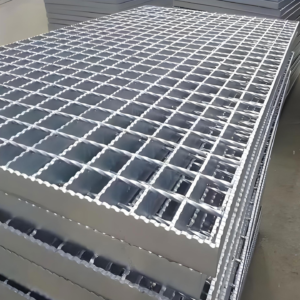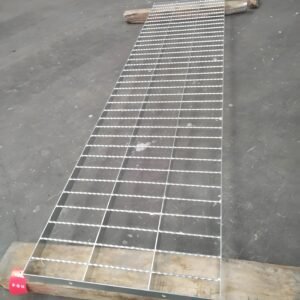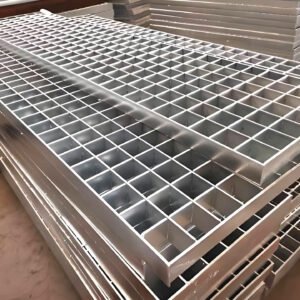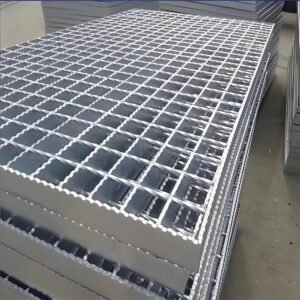

Wind Turbine Grating Factory Direct | G323/20/50 Wind Power Specialized | Hot-Dip Galvanized | Guardian of 100-Meter High-Altitude Safety
Inside a 100-meter-high wind turbine tower, maintenance personnel climb tens or even hundreds of meters of vertical ladders daily, performing inspections and repairs within narrow platform spaces. Have you ever considered: once the platform grating shakes, rusts, or weld seams fail—what would be the consequences?
A single fall from height could mean the loss of a life. A single platform replacement could mean days of downtime and enormous losses in power generation.
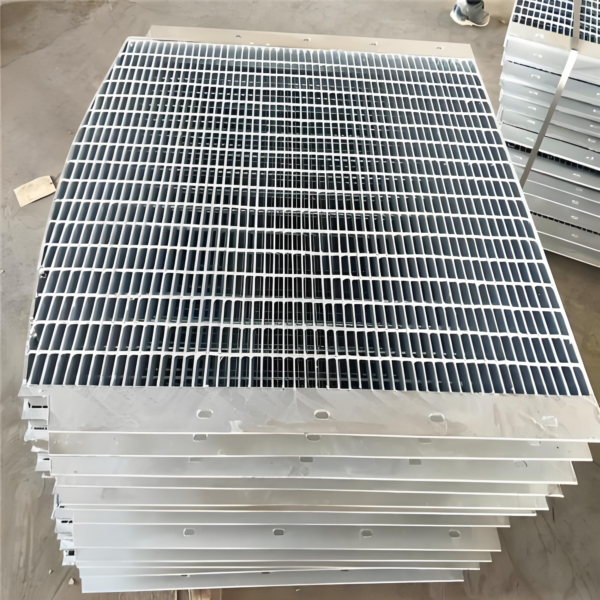
Wind Turbine Grating—the life-safety platform custom-designed for the high-altitude environment of wind turbine towers.
With 20 years of expertise in steel grating manufacturing, we operate fully automated pressure welding production lines and large-scale hot-dip galvanizing workshops. From onshore to offshore wind farms, from tower platforms to nacelle maintenance walkways, we deliver wind-power-specific grating solutions featuring 20+ years service life, slip resistance coefficient ≥0.6, uniform load capacity ≥3kN/m², and 100% full welding on both sides.
What is Wind Turbine Grating?
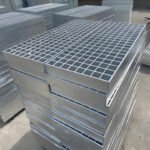
Wind turbine grating refers to steel grating products specifically engineered for platforms, walkways, and stair treads inside wind turbine towers. Since the exterior of turbine towers is inaccessible, all routine maintenance and repairs must rely on steel grating platforms and steel stair treads.
Its fundamental distinction from ordinary industrial steel grating lies in this: wind turbine grating must withstand dynamic loads from frequent personnel movement and tool handling within confined tower spaces, while maintaining absolute stability and safety throughout the entire wind farm’s lifecycle.
Core Application Scenarios of Wind Turbine Grating
In wind turbine towers, steel grating is primarily applied to the following critical areas:
| Application Area | Functional Description | Safety Level |
| Tower Platform | Rest platforms at each tower section joint for personnel breaks and equipment inspection | ⭐⭐⭐⭐⭐ Lifeline Critical |
| Nacelle Platform | Operating platform inside the turbine nacelle for servicing core components (generators, gearboxes) | ⭐⭐⭐⭐⭐ Lifeline Critical |
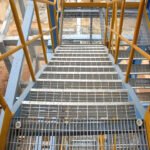
| Stair Treads | Steel stairs connecting platforms at different levels for daily personnel access | ⭐⭐⭐⭐⭐ Lifeline Critical |
| Blade Support | Auxiliary support structures for blade maintenance in certain designs | ⭐⭐⭐⭐ Important |
As turbine tower heights continue to increase, the physical demands and safety requirements for personnel regularly climbing to the tower top have become extremely stringent. Therefore, adopting safe and reliable steel grating platforms not only improves work efficiency but also ensures personnel safety.
Six Core Advantages of Wind Turbine Grating
✅ High-Altitude Safety Design – 100% Full Welding on Both Sides
The confined space inside turbine towers and high-frequency personnel movement demand exceptionally high platform safety. Our wind turbine grating strictly adheres to wind power industry manufacturing requirements:
Uniform mesh surface: All grating panels are cut cleanly—no burrs, no deformation
Edge banding requirements: Edge bands must be fully welded on both sides, ensuring absolute edge integrity
Special edge banding: Requirements may include patterned border edge bands or angle steel edge bands
Weld inspection: 100% inspection of every panel—zero tolerance for false welds or missed welds
✅ Extreme Corrosion Protection – 20+ Years Service Life
Wind turbine towers are permanently exposed to outdoor elements—onshore turbines face wind and rain erosion, while offshore turbines confront salt spray corrosion. Our products feature hot-dip galvanized surface treatment with exceptional anti-corrosion performance:
Zinc coating thickness: Reaches 85-100μm, significantly exceeding national standard requirements for medium-based materials (≥70μm)
Salt spray testing: Withstands 2,000 hours of salt spray testing—equivalent to 5 years of natural coastal corrosion
Application range: Within pH 6 to pH 12.5, the zinc surface forms a stable protective film with excellent corrosion resistance
Maintenance frequency: Reduces maintenance frequency by over 80%
✅ Specialized Specification G323/20/50 – The Industry Standard Choice
Validated by years of production experience from renowned domestic wind turbine manufacturers, G323/20/50 has become the standard specification for wind turbine tower grating:
| Parameter | Specification Value | Design Consideration |
| Bearing bar | 32×3mm | Optimal strength-to-weight ratio |
| Bar spacing | 20mm | Maximum resistance to surface impact |
| Cross bar spacing | 50mm | Balances load capacity and lightweight design |
| Cross bar type | Twisted square steel | Enhanced slip resistance |
This specification optimally satisfies wind turbine tower load-bearing inspection requirements while minimizing material waste—making it the most appropriate steel grating specification.
✅ High Load Capacity – Meeting Heavy-Duty Requirements
Wind turbine tower platforms must support the weight of maintenance personnel along with tools and equipment they carry. Our products, manufactured from high-strength carbon steel, deliver exceptional load-bearing performance:
Tensile strength: ≥795MPa (when using 2507 duplex stainless steel)
Load capacity per square meter: 3-5 tons, meeting the heavy-duty requirements of wind turbine tower inspection platforms
Load standards: Compliant with YB/T 4001.1-2007 (Steel Grating and Accessories Part 1: Steel Grating)
✅ Slip Resistance and Drainage – Ensuring Operational Safety
Turbine tower interiors may contain oil, grease, and moisture—making platform slip resistance critically important. Our products provide multiple safety features:
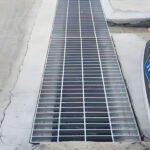
Grid structure: Square grids formed between bearing bars and cross bars prevent water and dust accumulation
Rapid drainage: Grid design enables quick water drainage, preventing slip hazards from standing water
Slip-resistant design: Twisted cross bars significantly increase friction between footwear and platform surface, providing excellent anti-slip performance
Self-cleaning: No accumulation of rain, snow, or standing water—self-cleaning and easy to maintain
✅ Lightweight Design – Easy Installation
Using steel grating as the primary platform component significantly reduces material usage, thereby decreasing platform weight and facilitating installation and use:
Lightweight structure: High strength combined with light weight—minimal burden on the overall tower structure
Ventilation and lighting: Excellent ventilation, lighting, and heat dissipation performance
Quick installation: Products require no on-site processing; installation is rapid—simply secure with bolt clamps on pre-installed supports
Specifications & Selection Guide
Wind Power Specialized Standard Specifications
Based on wind power industry practices, we recommend the following standard specifications:
| Model | Bar Specification | Bar Spacing | Cross Bar Spacing | Application Scenario | Recommended Span |
| G323/20/50W | 32×3mm | 20mm | 50mm | Tower platforms, nacelle platforms (industry standard) | ≤1200mm |
| G323/20/50S | 32×3mm serrated | 20mm | 50mm | High slip resistance requirements, humid environments | ≤1200mm |
| G253/20/50 | 25×3mm | 20mm | 50mm | Light auxiliary platforms | ≤1000mm |
| G325/30/50 | 32×5mm | 30mm | 50mm | Heavy-load inspection areas | ≤1500mm |
| G505/40/100WU/LU | 50×5mm | 40mm | 100mm | Turbine foundation platforms (welded/press-locked) | As designed |
Note: WU represents welded steel grating; LU represents press-locked steel grating
Material Selection
| Material | Surface Treatment | Application Environment | Service Life |
| Q235 Carbon Steel | Hot-dip galvanized (≥85μm) | Onshore wind power, standard environments | 20-25 years |
| Q355D Grade Steel | No anti-corrosion treatment (special requirements) | Specific design requirements | As designed |
| Q355B High-Strength Steel | Hot-dip galvanized | Large spans, heavy-load requirements | 25-30 years |
| 2507 Duplex Stainless Steel | Natural finish/pickling | Offshore wind power, high-corrosion environments | 30-50 years |
Manufacturing Process Requirements
Wind turbine tower steel grating manufacturing requirements are exceptionally stringent:
| Process | Characteristics | Application Scenarios |
| Welded Type (WU) | Formed by pressure welding twisted square steel to bearing bars under high temperature and pressure | Standard tower platforms |
| Press-Locked Type (LU) | Slotted insertion and compression locking—no weld points | Applications requiring high aesthetic standards |
Installation Essentials: Details Determine High-Altitude Safety
The installation quality of turbine tower platforms directly impacts long-term operational safety. Here are critical considerations:
🔧 Load Direction Requirements
Bearing bars must be placed radially along the wind turbine foundation. This is the key requirement ensuring correct force transmission and platform stability.
🔩 Fixing Installation
Bolt fixing: Stainless steel bolt connections recommended; secure with bolt clamps on pre-installed supports
Number of fixings: Minimum 4 clamps per panel, ensuring secure fixation
Anti-loosening measures: Lock washers recommended in high-vibration areas
🔍 Welding Requirements
Edge band welding: Must be fully welded on both sides, ensuring absolute edge integrity
Weld inspection: 100% visual inspection; penetrant testing if necessary
Post-weld treatment: Remove slag, touch up with zinc-rich paint
✅ Acceptance Criteria
Flatness: Platform surface smooth, no warping or deformation
Fixation stability: No movement, no abnormal noise
Weld quality: Full penetration, no porosity, no slag inclusion
Galvanized coating: Complete and uniform, no damage, no missed coating
Why Choose Us as Your Long-Term Supplier?
✅ Wind Power Specialized Product Line – Precisely Matching Requirements
We have conducted in-depth research into the special requirements of the wind power industry, developing a dedicated wind turbine grating product line. Products are optimized across load capacity, slip resistance, corrosion protection life, and welding processes—perfectly matching the high-altitude environment of turbine towers and 20+ year lifecycle requirements.
✅ Full Industry Chain Production – Controllable Quality
We operate a complete industry chain from bar rolling and automatic pressure welding to hot-dip galvanizing. 5 fully automatic pressure welding production lines with monthly capacity exceeding 5,000 tons ensure timely delivery of large orders. All products, from raw material procurement to finished product inspection, strictly follow standardized process management.
✅ Large-Scale Hot-Dip Galvanizing Workshop – Guaranteed Zinc Coating
Self-operated large-scale hot-dip galvanizing facility with a zinc kettle measuring 14 meters, capable of processing extra-long workpieces. Strict implementation of GB/T 13912-2008 standards with zinc coating thickness of 85-100μm+ and salt spray testing exceeding 2,000 hours—ensuring 20+ years maintenance-free service.
✅ Rigorous Quality Inspection System
Weld strength testing: Shear resistance reaches 20-40kN/m², 100% weld penetration
Double-side full weld inspection: 100% inspection of edge band welds on every panel
Slip resistance testing: Friction coefficient ≥0.6
Flatness inspection: Diagonal deviation controlled within ±3mm
Galvanized coating inspection: Batch sampling ensures coating compliance
✅ Extensive Wind Power Project Experience
Our wind turbine grating products have been applied to:
Onshore wind projects: Tower platform systems for multiple large-scale wind power bases
Offshore wind projects: Offshore turbine foundation platforms and maintenance walkways
Turbine manufacturers: OEM supplier to major domestic wind turbine manufacturers
Wind farm retrofits: Platform replacement and upgrades for existing wind farms
Special Requirements for Offshore Wind Power
Offshore wind environments are significantly more demanding, imposing higher requirements on steel grating:
| Factor | Challenge | Solution |
| Salt spray corrosion | Corrosion rate 5-10× higher than onshore | Thickened galvanizing (≥100μm) or stainless steel |
| Typhoon impact | Extreme wind and wave loads | Reinforced fixing, press-locked process |
| Humid environment | Persistent high humidity, slip hazard | Serrated anti-slip bars, friction coefficient ≥0.6 |
| Maintenance difficulty | Limited offshore operation windows | Maintenance-free design, 20-year life |
For offshore wind applications, we offer patented fixing devices ensuring convenient, safe, and reliable installation of steel grating on foundation platform beams.
How to Select the Right Wind Turbine Grating for Your Project
Step 1: Determine Application Area
Tower platforms, nacelle platforms → G323/20/50W (industry standard)
Stair treads → G323/20/50S (serrated anti-slip)
Turbine foundation platforms → G505/40/100WU/LU
Step 2: Determine Environmental Conditions
Onshore wind power, standard environments → Q235 + hot-dip galvanized (85μm)
Cold regions, high-humidity areas → Q355B + thickened galvanizing (100μm)
Offshore wind power, high corrosion → 2507 duplex stainless steel
Step 3: Determine Installation Method
New projects → Reserve installation points as designed
Retrofit projects → Adapt to existing support structures
Step 4: Contact Us with Your Drawings
Provide your project type, tower specifications, and platform dimensions.
Our technical team will deliver professional solutions and quotations within 24 hours.
Frequently Asked Questions
Q1: Why use G323/20/50 specification for wind turbine tower platforms?
A: This specification was selected based on years of production experience from renowned domestic wind turbine manufacturers. The 20mm bar spacing provides maximum resistance to surface impact, while the 32×3mm bars ensure load capacity while minimizing material waste—making it the most appropriate steel grating specification.
Q2: What is the service life?
A: Under normal operating conditions, hot-dip galvanized products provide 20+ years service life, matching wind farm lifecycle requirements. For offshore wind applications, stainless steel is recommended, extending life to 30+ years.
Q3: Is special fixing required?
A: Yes. Turbine towers experience significant vibration. Stainless steel bolt fixing is recommended with minimum 4 fixing points per panel. Lock washers are recommended in high-vibration areas.
Q4: Why must edge bands be fully welded on both sides?
A: The confined space inside turbine towers and high-frequency personnel movement subject platform edges to significant impact forces. Full welding on both sides ensures absolute edge integrity, preventing safety hazards caused by single-side weld cracking.
Q5: Are offshore and onshore wind applications the same?
A: No. Offshore wind environments are significantly more demanding. Thickened galvanizing (≥100μm) or 316L/2507 stainless steel is recommended, along with specialized fixing devices to ensure typhoon resistance.
[Get Your Custom Wind Turbine Grating Solution Today]
Stop worrying about high-altitude safety. Stop replacing corroded platforms. Stop losing revenue to downtime.
Choosing our wind turbine grating means choosing the G323/20/50 industry standard, 20 years of corrosion protection, and 100% full-welded-on-both-sides life safety assurance.
Click here to contact our engineers. Inquire today for free selection advice and case studies of similar wind power projects!