

1. Press Welded Grating
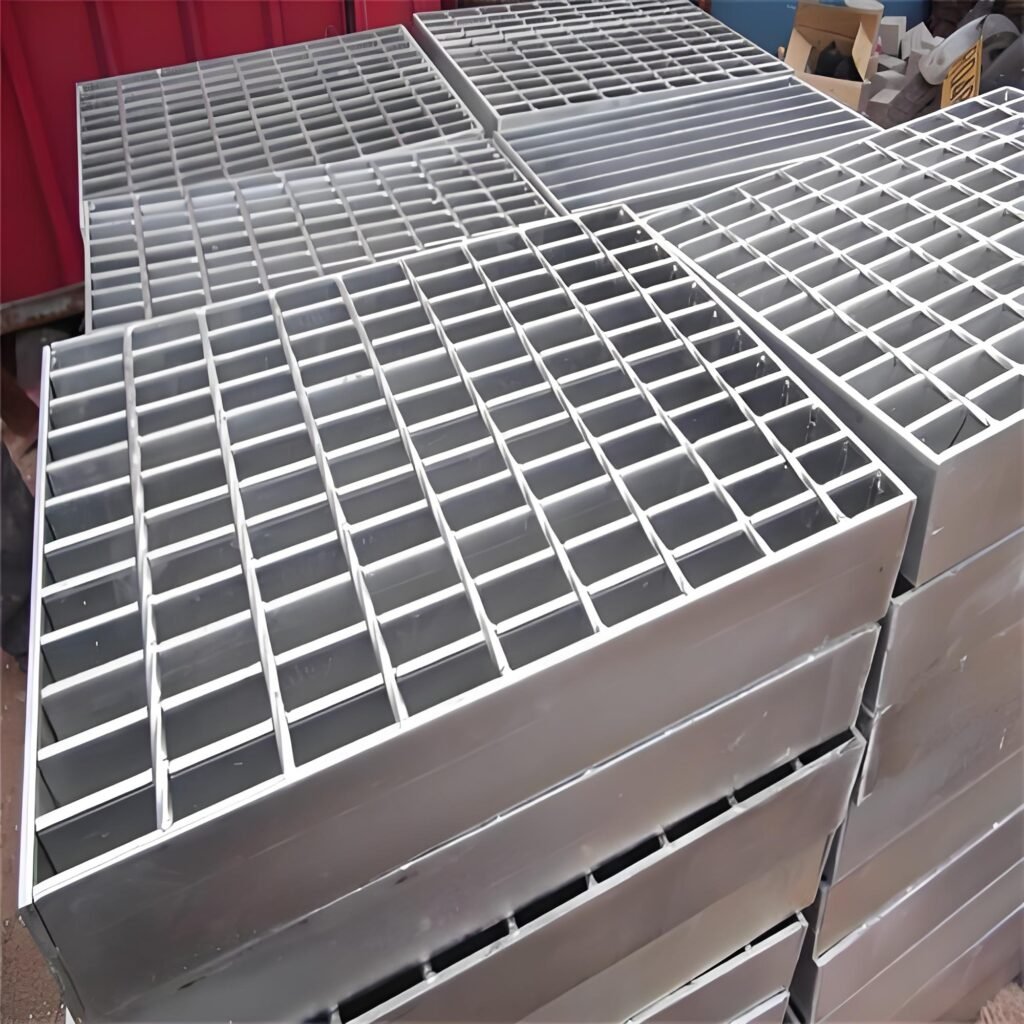
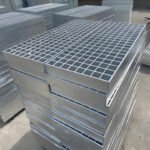
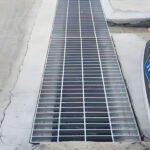
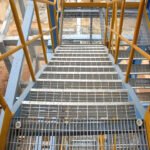
Press welded grating is a metal grid component formed by fusing load-bearing bars and cross rods, arranged in a rectangular pattern, under high-pressure electric resistance welding. This robust manufacturing method ensures a permanent, integral bond between the bars.
Manufactured from Q235A carbon steel or stainless steel, the standard center-to-center spacing for load-bearing bars is 30mm or 40mm series, with cross rod spacings of 50mm or 100mm.
Available Variations:
- Surface Types: Serrated (for superior slip resistance), Plain, I-Bar (for high strength), and Composite.
- Surface Finishes: Hot-dip galvanizing (most common) or painting.
- Key Advantages:
- Superior Strength: The high-pressure welding process creates an extremely strong and rigid grid, capable of handling heavy loads.
- Permanent Lock: The bars are fused together, eliminating the risk of loosening.
- Cost-Effective for High Volume: Ideal for large, standardized projects.
- Note: Hot-dip galvanized press welded grating can achieve a maintenance-free service life of up to 30 years in environments with a pH value between 6 and 12.5.
2. Composite Grating
Composite grating is a hybrid product that combines the structural strength of a standard steel grating panel with the solid, slip-resistant surface of a checkered plate (tread plate). This design offers a completely sealed walking surface.
It can be fabricated using any model of steel grating as the base and a checkered plate of varying thickness. The most common configuration uses G323/40/100 grating as the base panel with a 3mm thick checkered plate, though 4mm, 5mm, or 6mm plates are also available.
Key Advantages & Applications:
- 100% Sealed Surface: Prevents the passage of small objects, liquids, and light.
- Exceptional Slip Resistance: The raised pattern of the checkered plate provides a safe walking surface, even in oily or wet conditions.
- Enhanced Load Capacity: The combination creates an extremely strong panel for heavy-duty applications.
- Ideal For: Platforms requiring high safety standards, areas where small items must not fall through, and environments requiring a solid deck (e.g., pedestrian walkways, factory floors, offshore platforms).