

The manufacturing process defines the strength, application, and economy of steel grating. Understanding the difference between our primary methods—pressure welding and fabrication—ensures you select the most effective and cost-efficient solution.
Pressure Welded Steel Grating
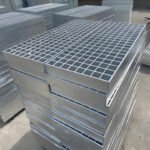
Pressure welding is our automated, high-volume manufacturing process that fuses bearing bars and cross bars into a single, incredibly strong unit. This method is ideal for standardised, large-area projects requiring uniform strength and exceptional cost-efficiency.
- Key Features & Benefits:
- Superior Structural Integrity: The fusion-welded joint creates a permanent, rigid connection with high load-bearing capacity.
- Consistent Quality & Economy: Automated production ensures every panel is identical, delivered at a highly competitive price point—perfect for large orders.
- Flat, Even Surface: Provides a smooth walking surface ideal for expansive platforms and walkways.
- Ideal Applications:
- Large-Scale Industrial Flooring and Factory Platforms.
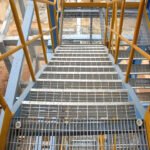
- Standardised Walkways in power plants, water treatment facilities, and chemical plants.
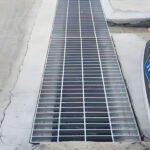
- Trench Covers and Drainage Grating for municipal projects.
Fabricated (Hand-Welded) Steel Grating
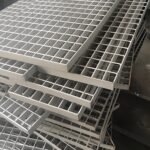
For non-standard designs and complex shapes, fabricated grating is the answer. Our skilled welders manually assemble each panel, offering unparalleled flexibility to meet the most precise project specifications.
- Key Features & Benefits:
- Total Design Flexibility: We can create virtually any shape, size, or bar configuration to fit unique spaces or load requirements.
- Ideal for Customisation: Perfect for complex cut-outs, irregular shapes, and integrating with existing structures.
- No-Mould Manufacturing: The hand-welding process eliminates the need for expensive moulds, making custom projects economically viable.
- Ideal Applications:
- Custom-Designed Platforms around specific machinery or equipment.
- Irregular Access Hatches and Complex Shaped Flooring.
- Architectural Features and special safety barriers where standard panels are unsuitable.